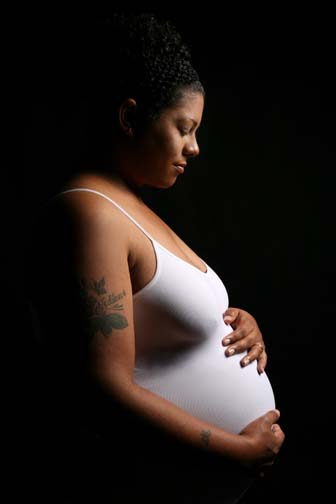
A bunch of us were leaving a monthly support group last night, which happens to be held in a hospital. Some moms, particularly those who gave birth and/or lost their babies in that hospital do not feel comfortable going into the building alone, if at all. Many of us still feel uncomfortable at the sight of babies and pregnant women, and the maternal-fetal medicine unit is a few floors down from where our meetings are held.
On our own, the feelings we each get when faced with a very pregnant woman or a newborn baby usually involve dread, sadness, fear, panic, anger, jealousy, agitation, isolation, and a whole host of other emotions. Well, last night, after just discussing this very thing in our group, we all got on the elevator to leave, the elevator stopped a few floors down, and a whole gang of big pregos got on. I say "gang" because it did feel a little bit like the socs vs. the greasers. Somehow, together we were able to laugh. I guess it wasn't funny ha-ha, but funny surreal.

Wednesday, July 27, 2005


One is silver, the other is...old
I made an observation to my friends on SPALS recently about how the relationships I have with friends I have met or become closer to since Julian was born seem more open and honest. One of the responses I got really struck me. A woman said, "They don't know the old you, so they aren't waiting for her to come back."
I find that some family members and old friends have an expectation that I am going to get better or get over my son so that they can relate to me again. This has been a real frustration for me. I would like to think that I would be a little more sensitive and mindful, even if I had not had this experience. What some people fail to realize is, having my son has changed me forever, for better and for worse. This is who I am now, this is my reality, this is my new "normal."
I find that some family members and old friends have an expectation that I am going to get better or get over my son so that they can relate to me again. This has been a real frustration for me. I would like to think that I would be a little more sensitive and mindful, even if I had not had this experience. What some people fail to realize is, having my son has changed me forever, for better and for worse. This is who I am now, this is my reality, this is my new "normal."
Tuesday, July 26, 2005
If I could dream you awake...
I had a dream about my little boy last night. Immediately after he died, I had dreams that were more like anxiety-induced nightmares in which my mind replayed scenes from his birth and death over and over again, trying to make sense of the reality that he was gone.
Last night's dream was different. He was not a newborn, but a 7 month old baby, as he would be now. In my dream, he still had cardiomyopathy, but he didn't die, and he was home with us growing big and strong. I kept taking photos of him in his crib, which was probably influenced by something I had been reading about vintage memorial photography in my waking life. When I picked him up, I felt like I could really smell and feel him. He kept saying "ya-ya."
The dream didn't upset me at first, but as the day has gone by, I guess it has made me a little sad. Some people would believe that this was his way of telling me that he's okay now, although his spirit has taken a different form. I'm not sure what to believe. I just miss him. No matter what anyone says, I do feel that I continue to have a relationship with him on some level. I guess I'm just trying to figure out what that is.
Last night's dream was different. He was not a newborn, but a 7 month old baby, as he would be now. In my dream, he still had cardiomyopathy, but he didn't die, and he was home with us growing big and strong. I kept taking photos of him in his crib, which was probably influenced by something I had been reading about vintage memorial photography in my waking life. When I picked him up, I felt like I could really smell and feel him. He kept saying "ya-ya."
The dream didn't upset me at first, but as the day has gone by, I guess it has made me a little sad. Some people would believe that this was his way of telling me that he's okay now, although his spirit has taken a different form. I'm not sure what to believe. I just miss him. No matter what anyone says, I do feel that I continue to have a relationship with him on some level. I guess I'm just trying to figure out what that is.
Monday, July 25, 2005
Tattoos for Julian
Robert and I got tattooed during our recent visit to my hometown during the Ann Arbor Art Fair. The experience was emotional and painful, yet pleasurable and healing at the same time. Artwork and tattoos were crafted by the lovely and amazing Jeff Zuck.

Daddy's tattoo

Mommy's tattoo
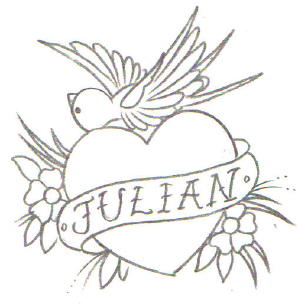
Daddy's tattoo

Mommy's tattoo
Sunday, July 03, 2005

Friday, May 20, 2005
If you've nothing nice to say...
...don't say anything at all. I guess that's why I haven't posted in nearly two months. The response to my blog has been amazing, but realizing that people are looking to me for hopeful and inspiring words is too much pressure right now. I haven't been feeling very full of hope or inspiration lately.
Being back at work is not the greatest thing with no baby to go home to, to make all the stress worthwhile. I'm not as focused as I used to be, and I hardly have any memory of anything that happened before Julian was born. My son, who lived and breathed and was a part of me, is dead. It's hard to feel hopeful about life, or to think of much else, under those circumstances.
My little boy would be 5 months old today. Very few people remember these anniversaries at this point. I feel like I am expected to have "moved on" by now by those who don't understand that grieving the loss of a child is a very non-linear process. Another thing I don't think people realize is that Robert and I are not just sad and feeling sorry for ourselves. We are sad and very sorry for our son, who never got to go outside, laugh, make love, eat strawberries...
I am reminded of this every time I see or hear of a pregnant woman, a couple with a newborn, or a father and son enjoying their lives together, probably never thinking that the worst could happen to them. Because 5 months is a long time to some people, people we know think the worst of our pain is over, and think nothing of casually mentioning other babies to us. I have been dodging acquaintances with babies and small children recently because it's not fair to put myself in the position of being pressured to interact with someone else's baby.
Truth be told, I have no intention of holding a baby that isn't my own anytime in the foreseeable future. I usually know myself very well and can anticipate my responses, but not knowing how I would react to holding another baby makes me very anxious and sad, so for now I feel I'm better off just avoiding the situation altogether.
Being back at work is not the greatest thing with no baby to go home to, to make all the stress worthwhile. I'm not as focused as I used to be, and I hardly have any memory of anything that happened before Julian was born. My son, who lived and breathed and was a part of me, is dead. It's hard to feel hopeful about life, or to think of much else, under those circumstances.
My little boy would be 5 months old today. Very few people remember these anniversaries at this point. I feel like I am expected to have "moved on" by now by those who don't understand that grieving the loss of a child is a very non-linear process. Another thing I don't think people realize is that Robert and I are not just sad and feeling sorry for ourselves. We are sad and very sorry for our son, who never got to go outside, laugh, make love, eat strawberries...
I am reminded of this every time I see or hear of a pregnant woman, a couple with a newborn, or a father and son enjoying their lives together, probably never thinking that the worst could happen to them. Because 5 months is a long time to some people, people we know think the worst of our pain is over, and think nothing of casually mentioning other babies to us. I have been dodging acquaintances with babies and small children recently because it's not fair to put myself in the position of being pressured to interact with someone else's baby.
Truth be told, I have no intention of holding a baby that isn't my own anytime in the foreseeable future. I usually know myself very well and can anticipate my responses, but not knowing how I would react to holding another baby makes me very anxious and sad, so for now I feel I'm better off just avoiding the situation altogether.
Thursday, March 24, 2005
Dictionary of Loss
I found Kara L.C. Jones' site today. She's the editor of the 'zine, A Different Kind of Parenting and co-founder of Kota Press. I especially related to her Dictionary of Loss. The following really struck me, since it describes how I've been feeling for the past several months, especially now that I'm back at work, in a very "public" role:
"Fear of the Public, n. 1. This fear will hit the bereaved parent from time to time until they are afraid to go out, afraid to see people, afraid of leaving the confines of their home in hopes of avoiding more pain or having to answer questions like 'When was your baby born?' or 'How many children do you have?' Involves knowing that you really want to talk about your child who died with these people, but realizing that the people who ask these questions don't want to hear the answers and will give you platitudes instead of comfort."
"Fear of the Public, n. 1. This fear will hit the bereaved parent from time to time until they are afraid to go out, afraid to see people, afraid of leaving the confines of their home in hopes of avoiding more pain or having to answer questions like 'When was your baby born?' or 'How many children do you have?' Involves knowing that you really want to talk about your child who died with these people, but realizing that the people who ask these questions don't want to hear the answers and will give you platitudes instead of comfort."
Wednesday, March 23, 2005
3 months ago
Three months ago today, I got to hold my son for the first time. He was three days old. We didn't get to hold him or touch him very much after he was born because he was easily agitated, and disturbing him while he was working so hard to stay alive tended to make his numbers go down.
When it was clear that he wouldn't be with us for much longer, the NICU nurse told me she thought I should hold him, and carefully wrapped him in a blanket and draped his tubes over my lap as she handed him to me. I instantly began to weep, both for the joy of holding my baby for the first time, and for the sadness of knowing that he was going to die.
I tried to be strong for Julian, as he had been for us. He had made it through labor and had survived for three days so we could get to know him before we had to say goodbye. I told him I loved him, and I thanked him for the time he had given to me, to us. I told him that it was okay for him to stop fighting for us and that we would be okay. His daddy told him to go to sleep.
Moments later, I could see on the monitor to my right that his heart rate was beginning to decline more rapidly, from triple to double digits. As he was dying, he had a period of becoming very alert. He opened his eyes and looked up at us. I am certain he wanted to let us know that he had heard us and that we had done right by him. He left us at 10:50am.
Julian, our sweet, beautiful little boy, mommy and daddy will always love and miss you terribly. Perhaps "this world was never meant for one as beautiful as you."
When it was clear that he wouldn't be with us for much longer, the NICU nurse told me she thought I should hold him, and carefully wrapped him in a blanket and draped his tubes over my lap as she handed him to me. I instantly began to weep, both for the joy of holding my baby for the first time, and for the sadness of knowing that he was going to die.
I tried to be strong for Julian, as he had been for us. He had made it through labor and had survived for three days so we could get to know him before we had to say goodbye. I told him I loved him, and I thanked him for the time he had given to me, to us. I told him that it was okay for him to stop fighting for us and that we would be okay. His daddy told him to go to sleep.
Moments later, I could see on the monitor to my right that his heart rate was beginning to decline more rapidly, from triple to double digits. As he was dying, he had a period of becoming very alert. He opened his eyes and looked up at us. I am certain he wanted to let us know that he had heard us and that we had done right by him. He left us at 10:50am.
Julian, our sweet, beautiful little boy, mommy and daddy will always love and miss you terribly. Perhaps "this world was never meant for one as beautiful as you."
Friday, March 18, 2005
Ambien, take me away
A woman I met in my pre-natal yoga class called me today to invite me to her home for a get together of new moms in the neighborhood. We were due around the same time, but I haven't seen her since November. When we met, I knew we were having a boy, but she and her husband decided not to find out about the sex of their baby. As it turned out, she had a little boy, too. Fortunately, she was kind enough to still want to see me, and didn't make me feel like our only connection was that we were supposed to be swapping newborn diapers.
Shortly after that, I ran into a student in the public restroom at work, and she asked about the baby. I hadn't realized how public my pregnancy had been. I told her that the baby had died, and she replied with, "Congratulations!" She was clearly not expecting to hear bad news, and had blocked it out in some way. I had to repeat what I had told her. She was speechless, and felt as horrible as everyone else who has asked an innocent question and gotten back my not-so-innocent answer. It just hangs in the air like a fog.
I don't know how much of this I can handle. I really don't.
I can't wait to be pregnant again. Robert came and picked me up from work today, and we went out to dinner. I had a few emotional moments and at one point I had a very physical, "gut" reaction. I feel like I am suppressing a howl over my pain of losing Julian. I feel the loss so physically, so acutely, at this particular moment, in a way that I haven't since the first few days after he died, when my body was still healing from labor. It may be that we are approaching the 20th of the month. He would be 3 months old.
Shortly after that, I ran into a student in the public restroom at work, and she asked about the baby. I hadn't realized how public my pregnancy had been. I told her that the baby had died, and she replied with, "Congratulations!" She was clearly not expecting to hear bad news, and had blocked it out in some way. I had to repeat what I had told her. She was speechless, and felt as horrible as everyone else who has asked an innocent question and gotten back my not-so-innocent answer. It just hangs in the air like a fog.
I don't know how much of this I can handle. I really don't.
I can't wait to be pregnant again. Robert came and picked me up from work today, and we went out to dinner. I had a few emotional moments and at one point I had a very physical, "gut" reaction. I feel like I am suppressing a howl over my pain of losing Julian. I feel the loss so physically, so acutely, at this particular moment, in a way that I haven't since the first few days after he died, when my body was still healing from labor. It may be that we are approaching the 20th of the month. He would be 3 months old.
Thursday, March 17, 2005
Back to work
Well, I went back to work this week after 2 1/2 months of maternity leave and 2 weeks vacation. As I suspected and had been warned of by other women who have been in my shoes, it has been a difficult week. Luckily, I went back during a quiet time in the semester. I've had several tearful visits from colleagues and students who have warmly welcomed me back. I've also had the unfortunate experience of having to tell people who didn't know what happened.
The other morning on my way to work, I stopped off at the drug store near my office and the cashier asked about the baby. I broke down, causing a minor scene. I nearly turned around and went back home, but bravely went into the office and managed to get through the day. The work itself hasn't been difficult or overwhelming, but being in a position of having to interact with a lot of people is hard right now.
Most people have been very supportive, but the most disappointing response to my return has been from people who have actually avoided or ignored me. I am so personally hurt and angered by that type of behavior that it makes it hard for me to be diplomatic and collegial.
My son, Julian, was such a tough little guy, and I learned so much from him in the short time he was here--to take each day at a time, to take nothing for granted, to choose my battles wisely, and to stick up for myself and honor his memory when I need to. I refuse to manage other people's discomfort or to pretend that I'm fine to make other people feel better. If they think they're uncomfortable, awkward, or anxious, how do they think I feel?
Julian's fight during the short time he was with us inspires me not only to go on, but to live my life unapologetically and with courage. I honor him by being the type of mother he would have been proud of, as I am of him.
The other morning on my way to work, I stopped off at the drug store near my office and the cashier asked about the baby. I broke down, causing a minor scene. I nearly turned around and went back home, but bravely went into the office and managed to get through the day. The work itself hasn't been difficult or overwhelming, but being in a position of having to interact with a lot of people is hard right now.
Most people have been very supportive, but the most disappointing response to my return has been from people who have actually avoided or ignored me. I am so personally hurt and angered by that type of behavior that it makes it hard for me to be diplomatic and collegial.
My son, Julian, was such a tough little guy, and I learned so much from him in the short time he was here--to take each day at a time, to take nothing for granted, to choose my battles wisely, and to stick up for myself and honor his memory when I need to. I refuse to manage other people's discomfort or to pretend that I'm fine to make other people feel better. If they think they're uncomfortable, awkward, or anxious, how do they think I feel?
Julian's fight during the short time he was with us inspires me not only to go on, but to live my life unapologetically and with courage. I honor him by being the type of mother he would have been proud of, as I am of him.
Tuesday, March 08, 2005
Milestones
I've found that my grief takes on a different character depending on who I'm with. With some friends, I'm completely weepy, while with others, I become "the bitch," "the gossip," "the complainer," or "the educator." I was with a good friend yesterday, who doesn't mind hearing me complain (we tend to encourage each other in this regard), but I found at one point that my usual mile-a-minute banter about stupid things people have said or done switched to a mini-breakdown in two seconds flat.
I was recalling how the previous day, I left my apartment building, ready to face the day. Some days can be more challenging than others, but I was feeling okay. Not great, but okay. As I was leaving, one of the doormen was on the phone and I heard him talking about his baby girl and the things she was starting to do, like turn her head and look up at him. She was born within days of Julian, and I have always been slightly resentful of the fact that he never asked me about our baby or acknowledged our loss, although I know he is more than aware of the situation.
It's a small thing, but just hearing about his daughter's little milestones caused me such a wave of conflicting emotions. On one hand, I want to be happy for him. In the beginning of all this, I never thought that seeing or hearing about someone else's baby would upset me--after all, it's not my baby. Someone else's happiness doesn't have to mean my sorrow, but I can't help feeling jealous that I don't get to experience those little milestones with my baby. That's just it--I want MY baby.
My friend tried to comfort me by saying that I'd get to have those experiences soon enough, but as I started to tell her about the women I've met who've had subsequent pregnancies resulting in healthy babies, and how even they described their experiences as bittersweet at times, I lost it. I know there will be moments with our next baby that will be simultaneously exciting and beautiful and sad and painful, because we'll be reminded of the things Julian never got to do. I also know that we will love our next baby just as much, and hope to never cause him or her to feel otherwise. I think it will always be a little tough, knowing that there is someone missing from our family. I hope we are able to find ways over time to keep Julian in our lives. He will always be in our hearts.
I was recalling how the previous day, I left my apartment building, ready to face the day. Some days can be more challenging than others, but I was feeling okay. Not great, but okay. As I was leaving, one of the doormen was on the phone and I heard him talking about his baby girl and the things she was starting to do, like turn her head and look up at him. She was born within days of Julian, and I have always been slightly resentful of the fact that he never asked me about our baby or acknowledged our loss, although I know he is more than aware of the situation.
It's a small thing, but just hearing about his daughter's little milestones caused me such a wave of conflicting emotions. On one hand, I want to be happy for him. In the beginning of all this, I never thought that seeing or hearing about someone else's baby would upset me--after all, it's not my baby. Someone else's happiness doesn't have to mean my sorrow, but I can't help feeling jealous that I don't get to experience those little milestones with my baby. That's just it--I want MY baby.
My friend tried to comfort me by saying that I'd get to have those experiences soon enough, but as I started to tell her about the women I've met who've had subsequent pregnancies resulting in healthy babies, and how even they described their experiences as bittersweet at times, I lost it. I know there will be moments with our next baby that will be simultaneously exciting and beautiful and sad and painful, because we'll be reminded of the things Julian never got to do. I also know that we will love our next baby just as much, and hope to never cause him or her to feel otherwise. I think it will always be a little tough, knowing that there is someone missing from our family. I hope we are able to find ways over time to keep Julian in our lives. He will always be in our hearts.
Sunday, March 06, 2005
Like father, like son
Robert and I both had our hair cut last night by our friend and hairdresser, Brian, who comes to our apartment. Afterwards, I asked Robert if he thought my hair was too short. He asked me to turn around, from side to side, then smiled. I said, "You're laughing! It's too short!"
"No," he said, "I'm smiling because you look like Julian. It's cute."
It's strange to look in the mirror and see my baby. I also see Julian when I look at my husband, who looks nothing like me. For months we had wondered what Julian would look like, being very racially mixed. We tried to picture him, his eye color, hair texture, but it was anyone's guess.
When he came out, he was so beautiful and so familiar. We would have been able to pick our baby out of a crowded room, though we had never seen him before. It was like we had known him forever. We were both struck by his subtle resemblance to both of us, yet he was his own little person, feisty and stubborn as he fought to be born and to survive for a short while so we could get to know him. He got that from us, too.
"No," he said, "I'm smiling because you look like Julian. It's cute."
It's strange to look in the mirror and see my baby. I also see Julian when I look at my husband, who looks nothing like me. For months we had wondered what Julian would look like, being very racially mixed. We tried to picture him, his eye color, hair texture, but it was anyone's guess.
When he came out, he was so beautiful and so familiar. We would have been able to pick our baby out of a crowded room, though we had never seen him before. It was like we had known him forever. We were both struck by his subtle resemblance to both of us, yet he was his own little person, feisty and stubborn as he fought to be born and to survive for a short while so we could get to know him. He got that from us, too.
Pictures of you
Several of the brave women from SPALS have written to let me know how much "Julian's Room" has meant to them and how they have been touched by our little boy. I am constantly moved by the women I have met who have experienced their own tragic losses, yet are able to provide support and encouragement, even in the face of their own grief. It means so much to me that there are complete strangers out there who want to hear what I have to say and enjoy looking at pictures of Julian. It fills my heart to know that his life had meaning to those outside our inner circle.
This has been an emotional week for Robert and me, as I think we are experiencing a cumulative effect of our daily battles with grief. In addition to remembering and mourning the loss of our son, our hearts feel heavy with sadness for the hundreds of parents we have met (in person or via internet) and the stories they have shared about their dearly missed babies.
Neither of us ever expected to be inhabiting a world full of dead babies; we were supposed to be playing with our two month old healthy living baby boy right now, blissfully ignorant of this quiet community that we are now a part of. As hard as it is, we realize how important it is to tell our story, to listen to others' stories, and to look at images of others' babies who have passed away.
Friends and strangers alike have thanked us for sharing Julian with them through images and writing. It made me realize what a privilege it is for me to be able to look at a photo of someone else's baby who died. Parents of living children get to show off pictures of their babies at various stages, but people rarely ask parents in our situation to see pictures of our babies. Most of the time, it's because they don't want to upset us, but I have a feeling it's because some people feel it's too morbid. Pregnancy and infant loss is a taboo topic that often goes unacknowledged, leaving parents feeling that they don't matter, their child didn't matter, and that they can no longer share the joys that accompany pregnancy and parenthood like "normal" people. I hope our experience can help to educate others about these issues.
This has been an emotional week for Robert and me, as I think we are experiencing a cumulative effect of our daily battles with grief. In addition to remembering and mourning the loss of our son, our hearts feel heavy with sadness for the hundreds of parents we have met (in person or via internet) and the stories they have shared about their dearly missed babies.
Neither of us ever expected to be inhabiting a world full of dead babies; we were supposed to be playing with our two month old healthy living baby boy right now, blissfully ignorant of this quiet community that we are now a part of. As hard as it is, we realize how important it is to tell our story, to listen to others' stories, and to look at images of others' babies who have passed away.
Friends and strangers alike have thanked us for sharing Julian with them through images and writing. It made me realize what a privilege it is for me to be able to look at a photo of someone else's baby who died. Parents of living children get to show off pictures of their babies at various stages, but people rarely ask parents in our situation to see pictures of our babies. Most of the time, it's because they don't want to upset us, but I have a feeling it's because some people feel it's too morbid. Pregnancy and infant loss is a taboo topic that often goes unacknowledged, leaving parents feeling that they don't matter, their child didn't matter, and that they can no longer share the joys that accompany pregnancy and parenthood like "normal" people. I hope our experience can help to educate others about these issues.
Wednesday, March 02, 2005
Mama's night out
I talked to my mom today. She and her husband had just returned from vacation, and I reached her on her cell phone as she was shopping for the perfect frame in which to place a photo of Julian alongside the poem I had written for him. This reminded me of what I have been going through over the past few months, searching for the perfect stationary, the perfect picture frame, the perfect container for his ashes, the perfect way to commemorate him... What I realized is that each of these actions serve not only as a way for me to remember him, but also as a way to love him.
A friend's mother complimented my blog today, saying how amazing it is that I was able to create something so helpful after such a great loss. All I can say is that this is the only way I am able to continue to mother my son. I need to feel that his life had meaning for my husband and me, and that our hopes and dreams for him were not in vain.
I went to a support group meeting tonight. We had been to a previous support group that turned out to be a disaster, but my friend Lorraine found out about another group affiliated with Mount Sinai Hospital, and I decided to try it out. Robert couldn't come with me because of the timing, but I decided to go anyway. It was great--a much better experience than our previous one. Hopefully, Robert will get to attend a meeting of this group at a later date. It was definitely more in line with what I was expecting.
Strangely, Robert and I also experienced our first night "out" tonight. After Robert got off work, and after I left the support group meeting, we met up with our friends and went to the opening of an Off-Broadway show and after-party. It was great fun, but at some point we were talking to a woman whom we would have normally found eccentric and interesting in a New York sort of way, and found that we both wanted to interrupt and tell her about our loss in order to explain our complete lack of interest in what she was saying. We have been amazingly on the same page with all of that has happened. At least we can be thankful that our experience has strengthened our relationship, as opposed to tearing us apart as we understand happens to many couples after a loss such as ours.
How strange it was to be dancing, laughing, and having fun at a time like this. What a different life than what I thought I would be leading at this particular moment. I found myself dancing with a handsome young man, probably gay, and only a few years younger than me. To my surprise, my feelings toward him were more maternal than anything else. Even this experience, although very outside our recent experiences of grief, reminded me of Julian. It made me recall wondering how I would react if Julian were gay. Robert and I always agreed 100% that we would absolutely love him unconditionally, attend PFLAG meetings, and whatever else it took to support our son. We would be his biggest fans, no matter what course his life took.
Needless to say, it takes a little creativity to parent a child who is no longer living, but this blog is my response to those who question Julian's impact on our lives or how we can go on. We go on because we must, and because Julian would have wanted it that way. We go on living and loving Julian in the only way we can--by finding comfort and meaning in the everyday and the mundane, by standing up for what we believe, and by loving each other.
A friend's mother complimented my blog today, saying how amazing it is that I was able to create something so helpful after such a great loss. All I can say is that this is the only way I am able to continue to mother my son. I need to feel that his life had meaning for my husband and me, and that our hopes and dreams for him were not in vain.
I went to a support group meeting tonight. We had been to a previous support group that turned out to be a disaster, but my friend Lorraine found out about another group affiliated with Mount Sinai Hospital, and I decided to try it out. Robert couldn't come with me because of the timing, but I decided to go anyway. It was great--a much better experience than our previous one. Hopefully, Robert will get to attend a meeting of this group at a later date. It was definitely more in line with what I was expecting.
Strangely, Robert and I also experienced our first night "out" tonight. After Robert got off work, and after I left the support group meeting, we met up with our friends and went to the opening of an Off-Broadway show and after-party. It was great fun, but at some point we were talking to a woman whom we would have normally found eccentric and interesting in a New York sort of way, and found that we both wanted to interrupt and tell her about our loss in order to explain our complete lack of interest in what she was saying. We have been amazingly on the same page with all of that has happened. At least we can be thankful that our experience has strengthened our relationship, as opposed to tearing us apart as we understand happens to many couples after a loss such as ours.
How strange it was to be dancing, laughing, and having fun at a time like this. What a different life than what I thought I would be leading at this particular moment. I found myself dancing with a handsome young man, probably gay, and only a few years younger than me. To my surprise, my feelings toward him were more maternal than anything else. Even this experience, although very outside our recent experiences of grief, reminded me of Julian. It made me recall wondering how I would react if Julian were gay. Robert and I always agreed 100% that we would absolutely love him unconditionally, attend PFLAG meetings, and whatever else it took to support our son. We would be his biggest fans, no matter what course his life took.
Needless to say, it takes a little creativity to parent a child who is no longer living, but this blog is my response to those who question Julian's impact on our lives or how we can go on. We go on because we must, and because Julian would have wanted it that way. We go on living and loving Julian in the only way we can--by finding comfort and meaning in the everyday and the mundane, by standing up for what we believe, and by loving each other.
Monday, February 28, 2005
What not to say to a bereaved parent
Parents who have experienced the loss of a child often feel disoriented, depressed, anxious, angry, distressed, irritable, resentful, and even jealous of others' happiness. Instead of bringing home the "bundle of joy" they were expecting for months, they find themselves with empty arms, living a life much different than what they had been preparing for.
For me, one of the most difficult things to accept in the weeks following Julian's death was my new identity as a mother of a dead child. I was now part of a minority group that I didn't wish to belong to. My body grieved Julian by continuing to lactate despite the fact that he was gone and by continuing to produce "nurturing" hormones that made me want him even more. I paced my apartment in my nightgown, not knowing what to do, because what I was supposed to be doing was caring for my precious little boy.
Instead, we spent the first few weeks without him planning what to do with his remains, going over autopsy reports, arguing with the insurance company, and putting his things away. In my head, I constantly chanted, "I want my baby, I want my baby." I relived my last days of pregnancy and our short time with Julian every night as I fell asleep, and cried every morning when I woke up and realized that it wasn't all just a horrible nightmare. His beautiful face is etched in my memory and I can never forget.
Because the majority of pregnancies result in healthy babies, most people are blissfully unaware of what can go wrong during pregnancy and childbirth, and are therefore ill-equipped to respond to miscarriage, unexpected fetal illness or demise, stillbirth, or infant death. Not knowing what to say to the bereaved can be a source of discomfort, but that discomfort pales in comparison to the distress felt by the parents of a dead child. Grieving parents need compassion, patience, and kindness, and should never be put in the position of having to manage others' discomfort.
Our culture tends to believe that modern medicine is a fix-all solution, yet there are unfortunately many circumstances that are out of our control, despite the most heroic of medical interventions. When we first found out that something was seriously wrong with our son Julian's heart, most of our friends and acquaintances tried to reassure us by reminding us about "medical miracles."
In Julian's case, we were told that heart transplant was his only chance for survival, but that even that would not provide a long-term solution (and that's assuming that a compatible donor heart were available). We were told that transplant was like exchanging one disease process for another, and that the 5 year survival rate was only 50%.
Complications of heart transplants in infants include mental retardation, growth retardation, speech and developmental delays, a lifetime of immunosuppressive drug treatments and doctor's visits, and at least one further heart transplant. Simply put, our chances for bringing home a healthy baby were slim at best. There was nothing anyone could say to change that fact, nor the fact that he died.
From research and experience (yes, I have actually heard these things!), I have come to learn that bereaved parents need compassion and acknowledgement of their child who died, without judgment. While no one can know the right thing to say, the best responses are those that are honest, such as "I don't know what to say, but I'm sorry," or "I feel guilty that I have a healthy baby" if that is how you feel.
It's always better to say what's on your mind than to avoid the person, leading to his or her further sense of social isolation. The following is a list of what NOT to say to someone who has lost a child. If you have lost a child yourself, please feel free to add to this list by contributing a comment.
1. Nothing. Some people choose to say nothing because they aren't sure what to say, they are uncomfortable with death and reminders of their own mortality, they don't want to lose control of their emotions, they don't want to upset a grieving parent, or in rare cases, because they are truly insensitive people (really!). In reality, most bereaved parents welcome any words or acts of kindness, love, and support, as long as they are sincere.
I certainly welcome the opportunity to talk about Julian, and appreciate when others are able to mention his name or ask questions about my labor/delivery, which was one of the proudest moments of my life. I did have a baby, after all. I am a mother, although my child is not with me, and like any mother, I am always thinking of him. There is no right thing to say (arguably, there are wrong things to say, which I will get to later), but to a parent who has lost a child, acknowledging their loss is to acknowledge that the child existed.

In our case, even the Federal government acknowledges that Julian was here! We wouldn't expect any less from our friends, family, or colleagues.
2. "You're young, you can have another baby." This comment, though meant to give the bereaved parent hope for the future, does not acknowledge the importance of the baby who died. It suggests that a future child will be a replacement for the baby who died, rather than a sibling. It also falsely assumes that having another baby will erase the pain of the devastating loss when, chances are, the bereaved parent will never be "over" the baby they lost.
3. "It was God's will," "Everything happens for a reason," "God had another plan," "It was meant to be," or similar sentiment. People will often say these things to a bereaved parent without really thinking about what they are saying. Often, well-meaning outsiders take tragedy and loss as an opportunity to share their faith or to come up with their own explanation for the loss according to their religion, assuming that the grieving parent will share their beliefs. Firstly, not everyone believes in God, and secondly, not all religious people believe in fate or rely upon blind faith.
Personally, I do not choose to believe in a God that plans disasters and tragedies. To some bereaved parents, saying "It was God's will" is like saying that God meant to kill their baby. This is certainly far from comforting. For a thoughtful, in-depth discussion of this issue, I recommend When Bad Things Happen to Good People by Rabbi Harold Kushner.
4. "I know exactly how you feel." Every loss is unique and important, but it's important to try not to compare your experience of the loss of, say, your dog, to the bereaved parents' loss of their baby. My first childhood dog, Tiki, died when I was away at college. I felt I had lost my best friend. I was incredibly sad and cried for weeks. However, the grief that I felt over my dog's death had a beginning and an end. I was incredibly depressed years later in graduate school when my grandmother died and had to request extensions on my coursework. The death of an elderly person, unlike that of a child, however, is expected, and therefore often easier to accept.
Research over the past several decades has consistently shown that the loss of an infant is one of the most stressful events an adult may experience, and that the intensity of the grief experienced by parents following such a devastating loss is significantly higher than that experienced following the loss of a spouse or parent. In addition to the loss of the baby, bereaved parents often feel that they have lost a part of themselves. The loss of a baby also represents a loss of hopes and dreams, a loss of parenthood, a loss of innocence, and to a certain extent, a loss of the joy of pregnancy due to the fear of another loss.
5. "Are you feeling better?" To the grieving parent, this question sounds more like, "Aren't you over that yet?" and implies that grief has a timeline and that you are becoming impatient with the amount of time it is taking for the bereaved parent to "get over" his or her child. Parents never "get over" their children; they work through their grief, but they will never forget the child they lost, who will always be a part of their family.
It may take a great deal longer than you may expect for a bereaved parent to truly feel happy again. Everyday joys are often experienced as bittersweet for a mother or father who wishes she or he could have shared those experiences with the child they lost. A better question to ask is, "How are you?" or "How are you feeling?" These questions are non-judgmental and demonstrate that you are not making assumptions about where you think the bereaved parent should be in his or her grief work.
For me, one of the most difficult things to accept in the weeks following Julian's death was my new identity as a mother of a dead child. I was now part of a minority group that I didn't wish to belong to. My body grieved Julian by continuing to lactate despite the fact that he was gone and by continuing to produce "nurturing" hormones that made me want him even more. I paced my apartment in my nightgown, not knowing what to do, because what I was supposed to be doing was caring for my precious little boy.
Instead, we spent the first few weeks without him planning what to do with his remains, going over autopsy reports, arguing with the insurance company, and putting his things away. In my head, I constantly chanted, "I want my baby, I want my baby." I relived my last days of pregnancy and our short time with Julian every night as I fell asleep, and cried every morning when I woke up and realized that it wasn't all just a horrible nightmare. His beautiful face is etched in my memory and I can never forget.
Because the majority of pregnancies result in healthy babies, most people are blissfully unaware of what can go wrong during pregnancy and childbirth, and are therefore ill-equipped to respond to miscarriage, unexpected fetal illness or demise, stillbirth, or infant death. Not knowing what to say to the bereaved can be a source of discomfort, but that discomfort pales in comparison to the distress felt by the parents of a dead child. Grieving parents need compassion, patience, and kindness, and should never be put in the position of having to manage others' discomfort.
Our culture tends to believe that modern medicine is a fix-all solution, yet there are unfortunately many circumstances that are out of our control, despite the most heroic of medical interventions. When we first found out that something was seriously wrong with our son Julian's heart, most of our friends and acquaintances tried to reassure us by reminding us about "medical miracles."
In Julian's case, we were told that heart transplant was his only chance for survival, but that even that would not provide a long-term solution (and that's assuming that a compatible donor heart were available). We were told that transplant was like exchanging one disease process for another, and that the 5 year survival rate was only 50%.
Complications of heart transplants in infants include mental retardation, growth retardation, speech and developmental delays, a lifetime of immunosuppressive drug treatments and doctor's visits, and at least one further heart transplant. Simply put, our chances for bringing home a healthy baby were slim at best. There was nothing anyone could say to change that fact, nor the fact that he died.
From research and experience (yes, I have actually heard these things!), I have come to learn that bereaved parents need compassion and acknowledgement of their child who died, without judgment. While no one can know the right thing to say, the best responses are those that are honest, such as "I don't know what to say, but I'm sorry," or "I feel guilty that I have a healthy baby" if that is how you feel.
It's always better to say what's on your mind than to avoid the person, leading to his or her further sense of social isolation. The following is a list of what NOT to say to someone who has lost a child. If you have lost a child yourself, please feel free to add to this list by contributing a comment.
1. Nothing. Some people choose to say nothing because they aren't sure what to say, they are uncomfortable with death and reminders of their own mortality, they don't want to lose control of their emotions, they don't want to upset a grieving parent, or in rare cases, because they are truly insensitive people (really!). In reality, most bereaved parents welcome any words or acts of kindness, love, and support, as long as they are sincere.
I certainly welcome the opportunity to talk about Julian, and appreciate when others are able to mention his name or ask questions about my labor/delivery, which was one of the proudest moments of my life. I did have a baby, after all. I am a mother, although my child is not with me, and like any mother, I am always thinking of him. There is no right thing to say (arguably, there are wrong things to say, which I will get to later), but to a parent who has lost a child, acknowledging their loss is to acknowledge that the child existed.

In our case, even the Federal government acknowledges that Julian was here! We wouldn't expect any less from our friends, family, or colleagues.
2. "You're young, you can have another baby." This comment, though meant to give the bereaved parent hope for the future, does not acknowledge the importance of the baby who died. It suggests that a future child will be a replacement for the baby who died, rather than a sibling. It also falsely assumes that having another baby will erase the pain of the devastating loss when, chances are, the bereaved parent will never be "over" the baby they lost.
3. "It was God's will," "Everything happens for a reason," "God had another plan," "It was meant to be," or similar sentiment. People will often say these things to a bereaved parent without really thinking about what they are saying. Often, well-meaning outsiders take tragedy and loss as an opportunity to share their faith or to come up with their own explanation for the loss according to their religion, assuming that the grieving parent will share their beliefs. Firstly, not everyone believes in God, and secondly, not all religious people believe in fate or rely upon blind faith.
Personally, I do not choose to believe in a God that plans disasters and tragedies. To some bereaved parents, saying "It was God's will" is like saying that God meant to kill their baby. This is certainly far from comforting. For a thoughtful, in-depth discussion of this issue, I recommend When Bad Things Happen to Good People by Rabbi Harold Kushner.
4. "I know exactly how you feel." Every loss is unique and important, but it's important to try not to compare your experience of the loss of, say, your dog, to the bereaved parents' loss of their baby. My first childhood dog, Tiki, died when I was away at college. I felt I had lost my best friend. I was incredibly sad and cried for weeks. However, the grief that I felt over my dog's death had a beginning and an end. I was incredibly depressed years later in graduate school when my grandmother died and had to request extensions on my coursework. The death of an elderly person, unlike that of a child, however, is expected, and therefore often easier to accept.
Research over the past several decades has consistently shown that the loss of an infant is one of the most stressful events an adult may experience, and that the intensity of the grief experienced by parents following such a devastating loss is significantly higher than that experienced following the loss of a spouse or parent. In addition to the loss of the baby, bereaved parents often feel that they have lost a part of themselves. The loss of a baby also represents a loss of hopes and dreams, a loss of parenthood, a loss of innocence, and to a certain extent, a loss of the joy of pregnancy due to the fear of another loss.
5. "Are you feeling better?" To the grieving parent, this question sounds more like, "Aren't you over that yet?" and implies that grief has a timeline and that you are becoming impatient with the amount of time it is taking for the bereaved parent to "get over" his or her child. Parents never "get over" their children; they work through their grief, but they will never forget the child they lost, who will always be a part of their family.
It may take a great deal longer than you may expect for a bereaved parent to truly feel happy again. Everyday joys are often experienced as bittersweet for a mother or father who wishes she or he could have shared those experiences with the child they lost. A better question to ask is, "How are you?" or "How are you feeling?" These questions are non-judgmental and demonstrate that you are not making assumptions about where you think the bereaved parent should be in his or her grief work.
"My Name" by George Canyon
I'm not usually a fan of country music, but I found out about George Canyon's song, "My Name," through an online support network I'm involved with. Canyon is reported to have written the song for a friend coping with miscarriage and infant loss. The song is particularly powerful as it is written from a child's perspective. Though the lyrics have a slightly religious tone, I found the song and the video very moving--haunting, in fact. The only other song I am aware of that addresses this theme is Eric Clapton's, "Tears in Heaven," which I cannot bear to hear.
View the video online.
View the video online.
Friday, February 25, 2005
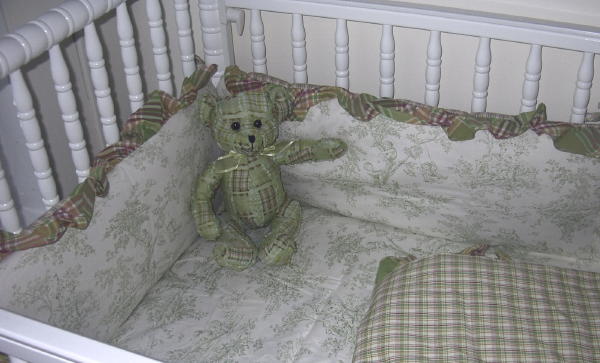
Julian's Room

Throughout the majority of my pregnancy, we lived in a one bedroom apartment, so I never got to decorate a real nursery for Julian. We moved into a larger apartment a few days before Julian was born. He was with us in this apartment, but he never got to see his nursery. I decided to go ahead and decorate the nursery rather than to wait for our next child.
Of course, seeing his empty crib makes me a little sad, but I know I would feel even sadder if I hid these things away and pretended that he didn't exist. The new items for the nursery make me happy and the room gives us hope for the future. Our next baby will grow up knowing about his or her brave big brother. For now, though, this is Julian's room.
Thursday, February 24, 2005
Bereavement Resources
SUPPORT ORGANIZATIONS
AMEND: Aiding Mothers and Fathers Experiencing Neonatal Death
The Compassionate Friends
The Hygeia Foundation, Inc. & Institute for Perinatal Loss
MISS Foundation
SHARE: Pregnancy & Infant Loss Support, Inc.
SPALS: Subsequent Pregnancy After a Loss Support
LITERATURE
A Broken Heart Still Beats: After Your Child Dies by Anne McCracken and Mary Semel. Hazelden Publishing & Educational Services, 2000.
Empty Cradle, Broken Heart by Deborah L. Davis. Fulcrum Press, 1996.
Empty Arms: Coping After Miscarriage, Stillbirth and Infant Death by Sherokee Ilse. Wintergreen Press, 2000.
AMEND: Aiding Mothers and Fathers Experiencing Neonatal Death
The Compassionate Friends
The Hygeia Foundation, Inc. & Institute for Perinatal Loss
MISS Foundation
SHARE: Pregnancy & Infant Loss Support, Inc.
SPALS: Subsequent Pregnancy After a Loss Support
LITERATURE
A Broken Heart Still Beats: After Your Child Dies by Anne McCracken and Mary Semel. Hazelden Publishing & Educational Services, 2000.
Empty Cradle, Broken Heart by Deborah L. Davis. Fulcrum Press, 1996.
Empty Arms: Coping After Miscarriage, Stillbirth and Infant Death by Sherokee Ilse. Wintergreen Press, 2000.
SIDS & Infant Death Survival Guide by Joani Nelson Horchler. SIDS Educational Services, 2003.
Trying Again: A Guide to Pregnancy After Miscarriage, Stillbirth, and Infant Loss by Ann Douglas. Taylor Trade Publishing, 2000.
Parenthood Lost: Healing the Pain after Miscarriage, Stillbirth, and Infant Death by Michael R. Berman. Bergin & Garvey Trade, 2001.
Pregnancy After a Loss: A Guide to Pregnancy After a Miscarriage, Stillbirth or Infant Death by Carol Cirulli Lanham. Berkley Publishing Group, 1999.
FOUNDATIONS & RESEARCH ORGANIZATIONS
American Heart Association
Children's Cardiomyopathy Foundation
March of Dimes
National Heart, Lung, and Blood Institute
National Organization for Rare Disorders (NORD)
The National SIDS/Infant Death Resource Center (NSIDRC)
Subscribe to:
Posts (Atom)